Caregiver burnout
When love is not enough and you are running on empty
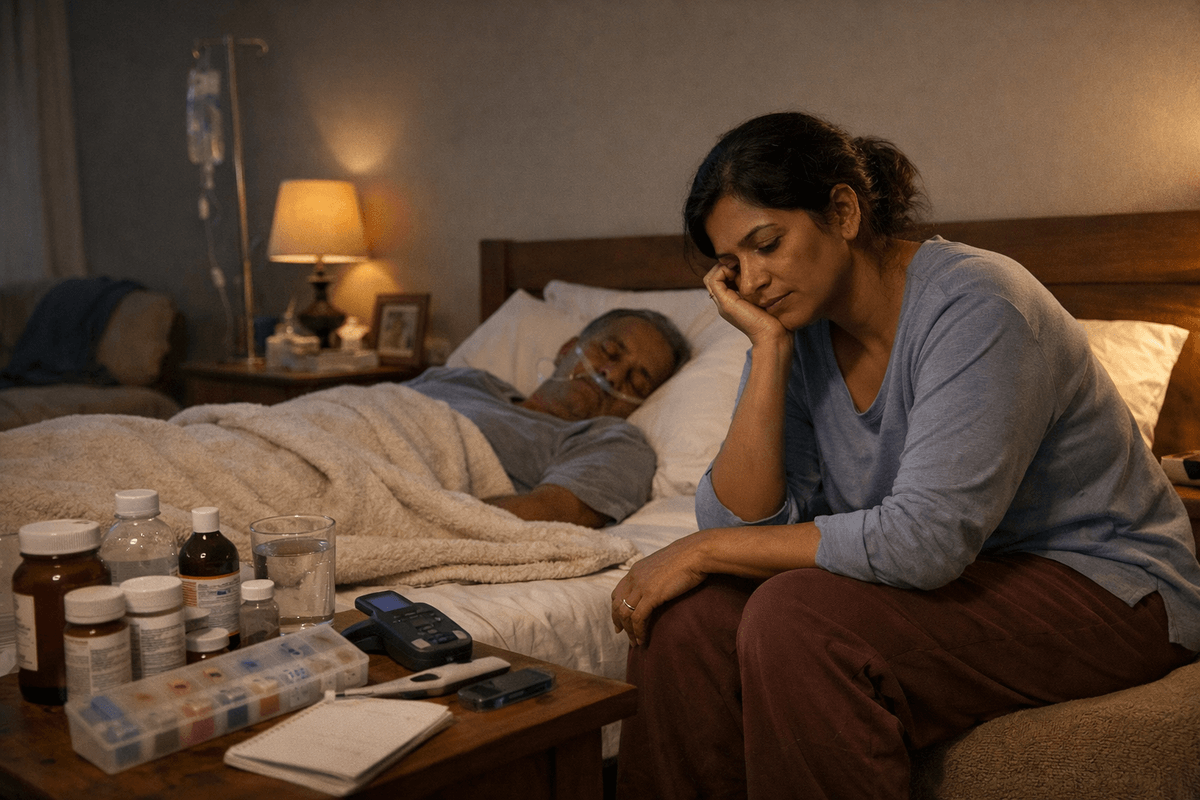
You are caring for someone you love - a parent with dementia, a disabled child, a partner with chronic illness - and it is consuming your life. You are physically exhausted, emotionally depleted, and your own health is suffering. You feel guilty about your anger and resentment. You are isolated, without support, carrying a burden that feels unbearable. This is caregiver burnout, and you are not alone. You deserve support - not as a failure of love, but as essential care for your own wellbeing and for your ability to continue as a caregiver.
Recognition
Does This Feel Like You?
If any of the following sound familiar, you are not alone — and you have come to the right place.
You feel physically exhausted all the time - sleep does not restore you, and the heaviness never lifts
You feel emotionally numb - you have run out of patience, compassion, and the ability to cope
You feel trapped - your life has become entirely about caregiving, with no time for yourself, your work, your relationships, or your interests
You are experiencing resentment or anger towards the person you care for - feelings you feel guilty about
You are isolated - other people do not understand what you are going through, or they have withdrawn their support
Your own physical health is suffering - you have developed symptoms, or your existing conditions have worsened
You are using alcohol or other substances to manage your stress and emotions
You are having thoughts that the person would be better off without you, or that you cannot do this anymore
You are making mistakes in caregiving or finding it hard to be present with the person you care for
Understanding
What Caregiver burnout Actually Is
Caregiver burnout is a state of physical, emotional, and mental exhaustion caused by prolonged caregiving stress. It occurs when the demands of caregiving exceed the resources available to meet them. Caregiving - particularly for someone with dementia, chronic illness, or disability - involves constant, often unseen work: physical tasks, decision-making, problem-solving, emotional labour, and relentless responsibility. For many caregivers, this work is done in isolation, without professional support, without respite, and often without the acknowledgement that caregiving is skilled, essential work that has real costs.
Caregiving burnout is not a personal failure. It is not a sign of weakness or lack of love. It is a predictable response to unsustainable demands and insufficient support. Burnout involves emotional exhaustion (feeling drained and unable to cope), depersonalisation (emotional distance from the person you care for), and reduced sense of accomplishment (feeling that nothing you do makes a difference).
Caregiving burnout has serious consequences - for the caregiver (depression, anxiety, health decline, shortened lifespan) and for the care recipient (reduced quality of care, increased risk of harm or neglect, admission to institutional care). Breaking the cycle of burnout requires both practical support and psychological intervention.
Clearing the air
What People Often Get Wrong
Misconceptions about Caregiver burnout cause real harm — they delay help and increase shame. Here is what is actually true.
Common belief
"If you love the person you should not feel burned out"
What's actually true
Love and burnout are not mutually exclusive. Loving someone does not mean you have unlimited resources or capacity to care for them. Burnout is a response to unsustainable demands, not a measure of your love.
Common belief
"You should be able to manage this on your own"
What's actually true
No one should be expected to provide intensive care alone, over months or years, without support. The expectation that you should manage alone is what creates burnout. Seeking support is not weakness; it is necessary.
Common belief
"Taking time for yourself is selfish"
What's actually true
Self-care and respite are not selfish. They are necessary maintenance of your own health and wellbeing. You cannot pour from an empty cup. Taking care of yourself enables you to continue caring for others.
Common belief
"Your anger and resentment mean you are a bad caregiver"
What's actually true
Anger and resentment are normal responses to overwhelming demands and insufficient support. These feelings do not make you bad. They are signals that you need help.
Common belief
"Professional help means you are failing as a caregiver"
What's actually true
Professional support - home help, daycare, counselling, respite care - is not failure. It is appropriate, necessary support for a complex, demanding task. Using available support is wise, not weak.
The science
Why This Happens
Caregiver burnout arises from a mismatch between the demands of caregiving and the available resources. Caregiving demands are high - particularly for someone with dementia or advanced illness, the care needs are constant and often unpredictable. Resources are often low - limited family support, financial strain, lack of access to professional services, and social isolation compound the burden.
Caregiver burnout is particularly common in certain situations: caring for someone with dementia (a progressive condition that becomes increasingly demanding over years); caring for a dependent relative whilst also working full-time; being a single caregiver with no one to share the burden; caring in cultural or family contexts where outside help is not sought or is unavailable.
Personal factors increase burnout risk: previous mental health difficulties, perfectionism, a tendency to prioritise others' needs over your own, lack of social support outside the caregiving relationship, and unresolved grief about the care recipient's condition.
Real impact
How Caregiver burnout Affects Daily Life
The effects go well beyond the symptoms themselves.
Physical health
Caregiver stress is associated with high blood pressure, weakened immunity, chronic pain, and worsening of existing health conditions. Caregivers often neglect their own health care and medication. Mortality risk increases significantly in caregivers experiencing high stress.
Mental health
Depression, anxiety, insomnia, and other mental health conditions are common in caregivers. Burnout itself can present as depression. Caregiver isolation increases vulnerability to mental health decline.
Relationships
Caregiving often puts strain on marriages and partnerships as the relationship becomes consumed by the caregiving role. Friendships drift as the caregiver has no time or energy for social contact. Family relationships can become strained by disagreements about caregiving or lack of support from family members.
Work
Many caregivers reduce working hours or leave work entirely, creating financial strain. Those who continue working face constant conflict between work demands and caregiving needs, and loss of professional identity and engagement.
Care quality
Burnout reduces the quality of care provided. An exhausted caregiver makes mistakes, is more irritable and less patient, and may engage in harsh responses or neglect. Whilst this does not reflect the caregiver's character, it reflects the unsustainability of the situation.
Before seeking help
What Most Families Try First
Most people who come to us have already tried a lot of other things. If any of these sound familiar, you are not alone — and you have not failed.
Trying harder - working longer hours, being more organised, attempting to meet all needs perfectly - which only increases exhaustion
Isolating further - withdrawing from support systems, attempting to manage alone, not accepting help - which deepens burnout
Using substances - alcohol, medication, or other drugs - to manage stress, which provides temporary relief but worsens the underlying problem
Sacrificing their own health and wellbeing - skipping meals, missing medical appointments, not sleeping - in the name of caregiving
Ignoring the problem and hoping it will improve on its own
Refusing respite care or professional help because "the person needs me" or "no one else can do it"
The process
How Caregiver burnout Is Diagnosed
Assessment of caregiver burnout focuses on understanding the caregiving situation, the caregiver's resources and support, the impact on their physical and mental health, and what interventions would be helpful.
- 1
Detailed exploration of the caregiving situation - who is being cared for, what are their needs, how much care is required daily
- 2
Assessment of the caregiver's physical and mental health - sleep, stress symptoms, mood, any health changes since caregiving began
- 3
Assessment of supports available - family involvement, professional services, respite care, financial resources
- 4
Assessment of isolation and social support - how much time the caregiver spends with others, quality of relationships outside caregiving
- 5
Exploration of the caregiver's sense of meaning and control - do they feel their caregiving matters, do they have any choice or control in the situation?
- 6
Assessment of safety - is the caregiver or care recipient at risk due to caregiver exhaustion?
- 7
Screening for depression, anxiety, and other mental health concerns
Assessment of caregiver burnout is not about blaming the caregiver or determining whether their burnout is "justified". It is about understanding their situation and identifying what support would help.
Ready to get clarity?
An accurate assessment is the starting point for everything. Dr. Divya takes the time to get it right — and to explain her findings clearly, without pressure.
Treatment
How We Help
Support for caregiver burnout addresses both the practical demands (accessing respite, services, financial support) and the psychological impact (grief, guilt, isolation, health management).
Practical support and care planning - exploring what formal and informal support could help, assisting with accessing services, helping with difficult decisions about levels of care
Counselling and emotional support - providing a space to express the full range of emotions, including guilt, resentment, and grief without judgment
Grief support - helping the caregiver process their own grief about what has been lost - their own health, their freedom, their relationship with the care recipient, their previous identity
Stress management and coping skills - teaching strategies for managing stress, maintaining boundaries, and preventing further deterioration
Mental health assessment and treatment - addressing depression, anxiety, or other conditions that may have developed or worsened
Support for maintaining caregiver health - education on managing chronic health conditions, ensuring medication adherence, encouraging medical care
Family counselling where appropriate - helping family members understand caregiver burnout and work together to provide support
Connection to support groups and peer support - connecting the caregiver with others who understand the experience
Planning for sustainability - helping the caregiver develop a sustainable approach to caregiving that includes respite, support, and attention to their own wellbeing
This is part of our Counselling & Psychotherapy service — where you can learn more about Dr. Divya's full approach.
Outcomes
What Improves with the Right Support
We are always honest about what is realistic. With appropriate support and time, these are the changes families and individuals most often notice.
The caregiver feels less alone - their experience is acknowledged and understood
They gain relief - whether through respite care, professional support, or help from family
Their own health improves - when stress is reduced and they have time for their own self-care
The quality of the caregiving relationship improves - as the caregiver is less exhausted and more emotionally present
They develop sustainable approaches to caregiving rather than operating at unsustainable intensity
They reconnect with aspects of themselves beyond the caregiving role - their interests, their relationships, their work
They feel less guilt and shame - recognising that their burnout is a response to real demands, not a personal failure
The care recipient often benefits - from a caregiver who is less stressed and more capable
Timing
When to Seek Help
Caregiver burnout is common but serious. If you are experiencing significant stress, exhaustion, or any of the following signs, seeking professional support is important.
-
You feel emotionally exhausted and unable to cope with the demands of caregiving
-
You are experiencing physical symptoms - fatigue, headaches, body pain, illness
-
Your own mental health has changed - you feel depressed, anxious, or hopeless
-
You are experiencing anger or resentment towards the person you care for
-
You are isolated and have no one to talk to about the stress you are under
-
You are neglecting your own health - not taking medication, missing doctor's appointments, not eating or sleeping well
-
You are using substances to manage your stress
-
You are having thoughts of harming yourself or the person you care for
-
You feel you cannot continue at your current level of caregiving
Caregiver burnout is a sign that you need support, not that you are failing. Seeking help is the right step towards a more sustainable path forward.
Not sure if you need help?
It is completely okay to reach out just to ask. Dr. Divya is happy to help you work out whether an assessment is the right next step — with no pressure.
Common questions
Frequently Asked Questions
Is it wrong to feel angry at the person I care for?
No. Anger is a normal response to overwhelming demands, loss of your own life, and constant stress. These feelings do not make you a bad caregiver or a bad person. They are signals that you need support and relief.
I feel guilty about wanting respite care. Am I failing the person?
No. Respite care - time away from caregiving duties - is essential for caregiver wellbeing and allows you to continue providing good care. Using respite is not failure; it is wise self-care that ultimately benefits both you and the person you care for.
What if I cannot afford professional help?
There are often free or low-cost support services available - support groups, community services, government assistance, charities focused on particular conditions. Speak to your doctor or a community health worker about what is available in your area.
How do I ask family members for help?
Be specific about what help you need, be clear about your limitations, and express how much their support would help you. Some family members do not realise how serious your situation is unless you tell them directly. Sometimes family counselling can help facilitate these conversations.
My partner says I am not coping well. Are they right?
Intense caregiving demands are genuinely difficult. If you are struggling, it may not mean you are not coping - it may mean you need more support. Consider whether additional help (professional services, family support, respite care) would make the situation more manageable.
Caregiver burnout is not your fault. You deserve support.
Book a consultation with Dr. Divya C.R. at Intune Mind, Coimbatore. In-person and telepsychiatry appointments available.