Insomnia and sleep disorders
When sleep becomes the hardest thing you do — and the rest of your life pays for it
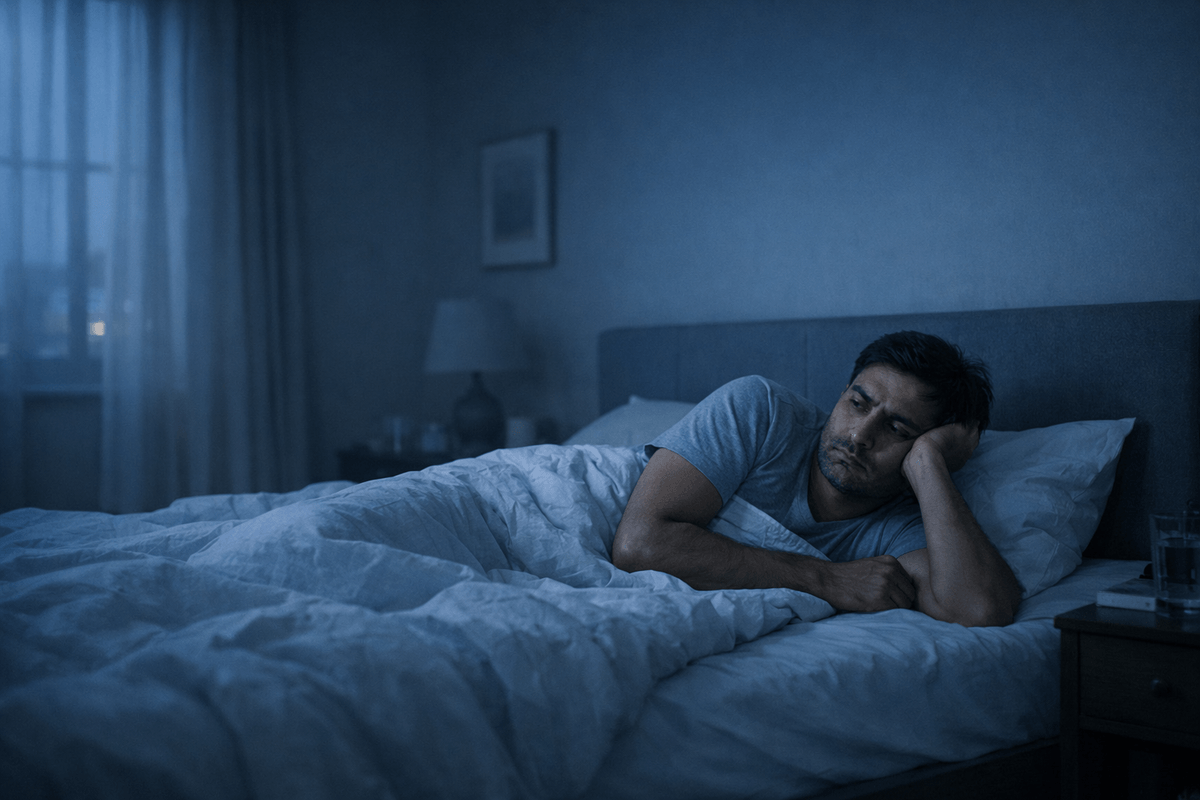
You lie down exhausted and your mind ignites. Or you fall asleep and wake at 3am, thoughts racing, unable to return. Over time, the dread of another bad night becomes part of the problem. Insomnia is not just tiredness — it reshapes mood, thinking, and health. And it responds well to the right treatment.
Recognition
Does This Feel Like You?
If any of the following sound familiar, you are not alone — and you have come to the right place.
You struggle to fall asleep most nights, lying awake for an hour or more despite being tired
You wake during the night and cannot get back to sleep — or wake much earlier than intended
Your sleep feels unrefreshing — you wake feeling as tired as when you went to bed
The difficulties have persisted for more than three months and happen at least three nights a week
You spend the day functioning below your best — foggy, irritable, unable to concentrate
You dread going to bed, lying there anxious about whether sleep will come
You have tried everything — herbal remedies, sleep hygiene rules, melatonin — and nothing has worked
Your mood, relationships, and work performance are all affected by the cumulative sleep debt
Understanding
What Insomnia and sleep disorders Actually Is
Insomnia is the most common sleep disorder. It is characterised by difficulty initiating sleep, maintaining sleep, or achieving restorative sleep — despite adequate opportunity — that causes significant daytime impairment. When this occurs at least three nights a week for three months or more, it is classified as chronic insomnia.
Insomnia is not simply tiredness or the occasional poor night's sleep. It is a clinical condition with a well-understood mechanism and highly effective treatments. It can be primary (not clearly explained by another condition) or co-occurring with depression, anxiety, chronic pain, or other medical or psychiatric conditions.
Other sleep disorders that warrant psychiatric or medical assessment include sleep apnoea (repeated interruption of breathing during sleep, causing fragmented sleep and daytime sleepiness), restless legs syndrome, circadian rhythm sleep disorders (difficulty sleeping and waking at socially expected times), and hypersomnia (excessive daytime sleepiness despite adequate night sleep).
The most important thing to understand about chronic insomnia is this: the initial cause may be stress, illness, or a life event — but the reason it persists is almost always psychological. Specifically, it is maintained by the patterns of thought and behaviour that develop around sleep: the monitoring, the effort, the dread, and the compensatory strategies that inadvertently perpetuate the problem.
Clearing the air
What People Often Get Wrong
Misconceptions about Insomnia and sleep disorders cause real harm — they delay help and increase shame. Here is what is actually true.
Common belief
"Sleeping pills are the best treatment for insomnia"
What's actually true
Sleeping pills provide short-term relief but do not address the mechanisms that maintain chronic insomnia — and in the long run can worsen it through dependence and rebound. Cognitive behavioural therapy for insomnia (CBT-I) is the first-line treatment recommended by all major sleep medicine guidelines.
Common belief
"You need eight hours of sleep to be healthy"
What's actually true
Sleep need varies significantly between individuals. Trying to force yourself to sleep eight hours when your body requires six or seven is counterproductive and can worsen insomnia. Treatment focuses on efficient, restorative sleep — not hitting a specific number.
Common belief
"If you cannot sleep, you should stay in bed and try harder"
What's actually true
Spending long periods lying awake in bed is one of the main drivers of chronic insomnia. It trains the brain to associate bed with wakefulness and arousal rather than sleep. One of the core components of CBT-I involves restricting time in bed to rebuild the association between bed and sleep.
Common belief
"Insomnia is just a symptom of anxiety or depression — treat those and sleep will sort itself out"
What's actually true
Insomnia and mental health conditions have a bidirectional relationship. Insomnia makes depression and anxiety worse, and they in turn worsen insomnia. In chronic insomnia, the sleep problem often needs to be treated directly alongside the mental health condition — not as a secondary symptom that will resolve automatically.
Common belief
"There is nothing you can do about insomnia without medication"
What's actually true
CBT-I produces lasting improvement in sleep for most people with chronic insomnia — better than medication, with effects that continue after treatment ends. It is not widely known, but it is highly effective.
The science
Why This Happens
Insomnia typically begins with a trigger — stress, illness, a significant life event, or a period of disrupted sleep. Most people recover naturally once the trigger passes. In some people, however, the insomnia persists — maintained by behavioural and cognitive factors that develop in response to the initial sleep difficulty.
The 3P model provides a useful framework: predisposing factors (biological and psychological vulnerability — some people have a naturally more reactive stress-response system), precipitating factors (the trigger that started the insomnia), and perpetuating factors (the patterns that maintain it — spending too long in bed, napping, avoiding social commitments due to tiredness, monitoring sleep, catastrophising about the consequences of poor sleep, and developing performance anxiety around sleep). CBT-I targets the perpetuating factors directly, which is why it works even when the original trigger is long gone.
Real impact
How Insomnia and sleep disorders Affects Daily Life
The effects go well beyond the symptoms themselves.
Daytime functioning
Concentration, memory, reaction time, decision-making, and emotional regulation are all impaired by poor sleep. Many people with chronic insomnia are functioning at significantly below their capacity without fully realising it.
Mood
Sleep deprivation lowers the threshold for negative emotion and reduces the capacity for positive experience. Chronic insomnia significantly increases the risk of depression and anxiety — and worsens both when they are already present.
Physical health
Chronic sleep deprivation is associated with increased cardiovascular risk, metabolic disruption, impaired immune function, and elevated inflammatory markers. The physical health consequences of untreated insomnia are real and accumulate over time.
Relationships
Irritability, reduced emotional availability, and the partner's sleep being disrupted all affect close relationships. Many people with insomnia feel guilty about the impact on those they share a bed and a home with.
Work
Absenteeism and presenteeism — being at work but not functioning effectively — are both elevated in chronic insomnia. The occupational cost is substantial.
Before seeking help
What Most Families Try First
Most people who come to us have already tried a lot of other things. If any of these sound familiar, you are not alone — and you have not failed.
Melatonin, herbal supplements, or over-the-counter sleep aids — which may help mildly in the short term but rarely resolve chronic insomnia
Prescription sleeping pills from a GP — effective short-term, but not intended for chronic use and do not address the underlying mechanisms
Strict sleep hygiene rules — useful background conditions, but insufficient on their own to treat established chronic insomnia
Trying harder to sleep — which increases performance anxiety and worsens the problem
Compensating with more time in bed, napping, or caffeine — which perpetuates the cycle
Alcohol to help fall asleep — which improves sleep onset but fragments sleep architecture and worsens sleep quality overall
The process
How Insomnia and sleep disorders Is Diagnosed
Assessment of insomnia involves understanding the full picture — the nature and history of the sleep difficulty, contributing factors, and what else may be going on.
- 1
A detailed sleep history — what the difficulty is (onset, maintenance, or early waking), how long it has persisted, the current sleep schedule, and what has been tried
- 2
Assessment of sleep hygiene, the sleep environment, and the behavioural patterns that may be perpetuating the insomnia
- 3
Assessment for co-occurring conditions — depression, anxiety, chronic pain, and other medical conditions are commonly associated with insomnia and must be assessed
- 4
Screening for other sleep disorders — sleep apnoea in particular requires separate investigation and has its own treatment pathway
- 5
Review of medications and substances that may affect sleep
A sleep diary kept for one to two weeks before the assessment provides valuable information and helps establish a clear baseline.
Ready to get clarity?
An accurate assessment is the starting point for everything. Dr. Divya takes the time to get it right — and to explain her findings clearly, without pressure.
Treatment
How We Help
CBT-I is the most effective treatment for chronic insomnia and is the starting point for most presentations. Where other conditions are driving or complicating the insomnia, these are addressed in parallel.
Cognitive behavioural therapy for insomnia (CBT-I) — the first-line treatment for chronic insomnia. Includes stimulus control (rebuilding the association between bed and sleep), sleep restriction therapy (consolidating sleep efficiency), cognitive restructuring (addressing unhelpful beliefs and monitoring around sleep), and relaxation techniques
Assessment and treatment of co-occurring depression, anxiety, or other conditions that are maintaining the insomnia
Medication review — assessing whether current medications are contributing to sleep difficulty, and whether short-term pharmacological support is appropriate during the CBT-I process
Sleep apnoea assessment and onward referral — where clinical features suggest sleep apnoea, appropriate investigation and referral for overnight sleep study or CPAP assessment is arranged
Psychoeducation about sleep — understanding what sleep actually is, what controls it, and why common strategies backfire is an important part of treatment
This is part of our Adult Mental Health service — where you can learn more about Dr. Divya's full approach.
Outcomes
What Improves with the Right Support
We are always honest about what is realistic. With appropriate support and time, these are the changes families and individuals most often notice.
Sleep onset time reduces — falling asleep becomes quicker and less effortful
Waking through the night becomes less frequent and returning to sleep easier
Daytime energy, concentration, and mood improve as sleep quality and efficiency increase
The dread and anxiety around bedtime diminishes as the association between bed and sleeplessness is replaced
A sustainable, flexible relationship with sleep — not a rigid set of rules, but a genuine capacity to sleep well most of the time
Improved management of depression and anxiety as the sleep piece is addressed
Timing
When to Seek Help
If sleep difficulties have persisted for more than three months, occur most nights, and are affecting your daytime functioning — it is worth seeking a proper assessment rather than continuing to manage alone.
-
Difficulty falling or staying asleep at least three nights a week for three months or more
-
Significant daytime impairment — fatigue, mood disturbance, concentration difficulties
-
Sleeping tablets that are not working, have become habitual, or that you are trying to reduce
-
Snoring, waking gasping, or excessive daytime sleepiness that may suggest sleep apnoea
-
Insomnia that developed alongside depression, anxiety, or a significant life event that has not resolved
Insomnia is treatable. You do not have to keep managing on no sleep.
Not sure if you need help?
It is completely okay to reach out just to ask. Dr. Divya is happy to help you work out whether an assessment is the right next step — with no pressure.
Common questions
Frequently Asked Questions
What is CBT-I and how does it work?
CBT-I is a structured psychological treatment for chronic insomnia. It works by addressing the behavioural patterns (like spending too long in bed) and cognitive patterns (like monitoring and catastrophising about sleep) that maintain insomnia, while gradually rebuilding a healthy, efficient sleep pattern. It typically runs over 6–8 sessions and produces lasting improvements for most people.
Is it safe to come off sleeping tablets?
Yes — but it should be done gradually and with support. Abrupt cessation of sleeping tablets, particularly benzodiazepines, can cause rebound insomnia and withdrawal symptoms. A structured, gradual reduction plan alongside CBT-I is the safest and most effective approach.
Could my insomnia be a symptom of something else?
Possibly. Insomnia commonly co-occurs with depression, anxiety, chronic pain, thyroid disorders, and sleep apnoea, among other conditions. A thorough assessment will look at the full picture and ensure that any underlying conditions are identified and treated.
I have always been a poor sleeper. Can that change?
Yes. Even long-standing insomnia responds to CBT-I. The duration of the problem does not determine the prognosis — what matters is whether the perpetuating factors can be addressed, and in most cases they can.
Can melatonin help?
Melatonin can be useful for circadian rhythm difficulties — jet lag, shift work, and delayed sleep phase — where it helps shift the timing of sleep. It has more limited evidence for chronic insomnia. It is not a substitute for CBT-I in established insomnia.
Good sleep is not a luxury. And it is not out of reach.
Book a consultation with Dr. Divya C.R. at Intune Mind, Coimbatore. In-person and telepsychiatry appointments available.