Depression in children
When your child stops caring about the things they used to love
Not sulking. Not a phase. Depression in children is real, it is more common than most parents realise, and it responds well to treatment — but it rarely looks the way adults expect it to.
Recognition
Does This Feel Like You?
If any of the following sound familiar, you are not alone — and you have come to the right place.
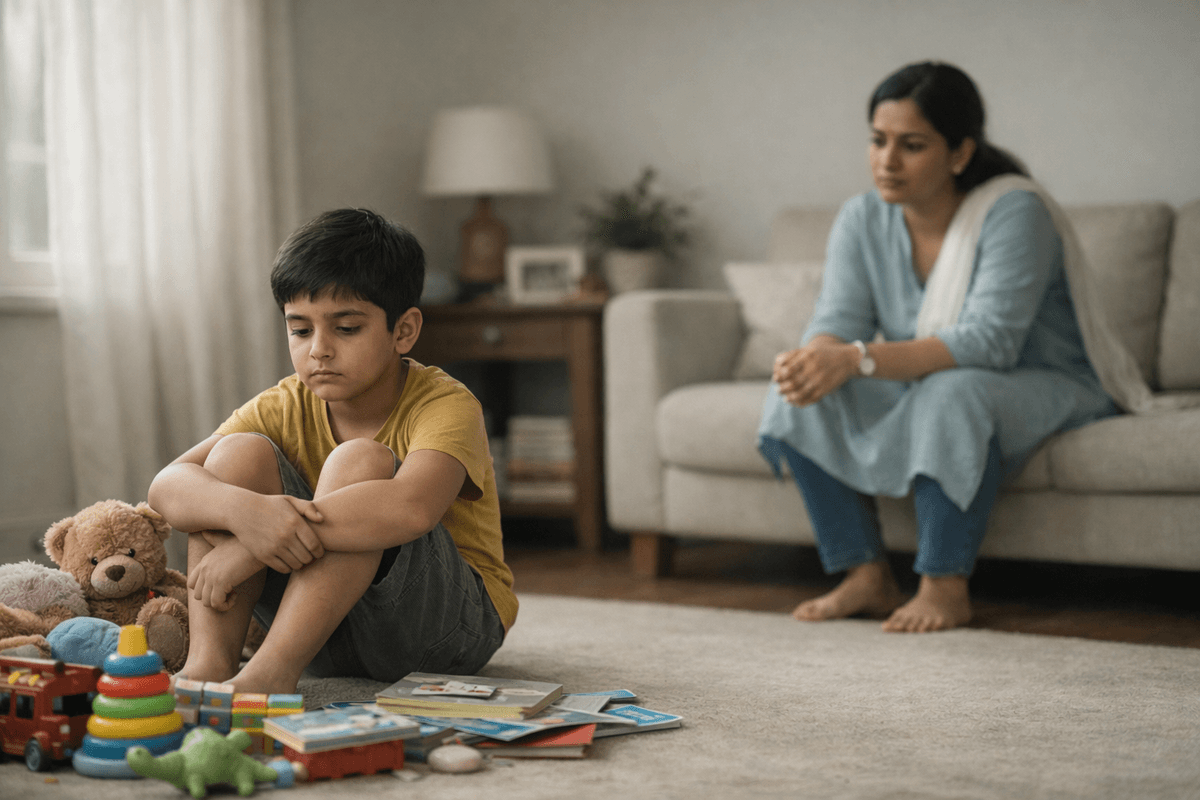
Your child has become noticeably quieter, more withdrawn, or no longer interested in things they used to enjoy
They seem flat, empty, or detached — not just sad, but switched off from their own life
They sleep far more than usual, or cannot sleep at all, and are exhausted regardless
Small things that never used to bother them now feel unbearable — they snap, shut down, or fall apart
Grades have dropped, friendships have thinned, and they seem to have simply stopped trying
They say things like "I don't care", "what's the point", or "nobody would miss me"
More irritable than sad — hostile and withdrawn rather than tearful
You feel like you are walking on eggshells, and the child you knew has quietly disappeared
Understanding
What Depression in children Actually Is
Depression is not sadness. It is a clinical condition in which the brain's regulation of mood, motivation, and energy becomes persistently disrupted. Children and adolescents can and do develop depression — affecting roughly 1 in 20 children before the age of 18.
Depression in children does not always look the way adults might expect. Adults with depression tend to be visibly sad, tearful, and withdrawn. Children with depression more often present with irritability, anger, and a quiet disengagement from everything that used to matter. This is one of the main reasons childhood depression is so frequently missed or misread as behavioural problems.
Adolescents more closely resemble adults in presentation — but their depression is routinely dismissed as "typical teenage behaviour." It is not. Depression at this age carries real risks if left unaddressed, and real benefits from early treatment.
Clearing the air
What People Often Get Wrong
Misconceptions about Depression in children cause real harm — they delay help and increase shame. Here is what is actually true.
Common belief
"Children can't really be depressed — they have nothing to worry about"
What's actually true
Depression is a brain-based condition, not a logical response to difficult circumstances. Children in stable, loving, comfortable homes can develop depression. Circumstances alone do not cause or prevent it.
Common belief
"It's just a moody teenage phase"
What's actually true
Normal teenage moodiness is episodic and situational. Depression is persistent — lasting weeks — and affects functioning across multiple areas of life. The distinction matters, and it is worth getting it assessed.
Common belief
"Talking about it will make it worse"
What's actually true
Research consistently shows the opposite. Ignoring or minimising depression does not reduce it. A non-judgemental conversation and professional assessment both help.
Common belief
"They'll grow out of it"
What's actually true
Without treatment, depression in childhood and adolescence tends to persist, recur, and worsen over time. Early intervention produces significantly better long-term outcomes.
Common belief
"They're too young for any real treatment"
What's actually true
Effective, age-appropriate treatments for childhood depression are well-established. Therapy — particularly CBT — is the first-line treatment. Medication is considered for more severe cases, with full parental involvement.
The science
Why This Happens
Depression is caused by a combination of genetic predisposition, neurobiological factors, and life experiences. A family history of depression increases risk. Significant life events — loss, trauma, bullying, family conflict — can act as triggers in a vulnerable brain. But depression can also develop without any obvious cause, which is one of the things that makes it so confusing for families.
The brain regions involved in mood regulation, motivation, and emotional processing can become persistently dysregulated — producing a low state that does not lift with reassurance, distraction, or time. This is why encouragement alone is not a treatment. Depression changes how the brain functions, and it requires clinical support to change back.
Real impact
How Depression in children Affects Daily Life
The effects go well beyond the symptoms themselves.
School performance
Concentration, memory, and motivation all suffer significantly. A previously engaged student may begin failing, missing work, or disengaging entirely from learning.
Friendships
Depressed children withdraw from peers, stop initiating contact, and lose the social connections that are critical to their development and wellbeing.
Family relationships
Irritability and emotional withdrawal create confusion and tension at home. Parents often feel rejected, not understanding that the behaviour is a symptom rather than a choice.
Physical health
Sleep disruption, appetite changes, fatigue, and unexplained physical complaints are common. The physical symptoms are real and can become the visible face of an invisible illness.
Long-term risk
Untreated adolescent depression significantly increases the risk of depression recurring in adulthood and carries a risk of self-harm that must be taken seriously.
Before seeking help
What Most Families Try First
Most people who come to us have already tried a lot of other things. If any of these sound familiar, you are not alone — and you have not failed.
Encouraging them to socialise, exercise, or "do something fun" — sometimes helpful as adjuncts, never sufficient as treatment on their own
Attributing it to school pressure, social media, or a friendship fallout, and trying to remove those stressors
Waiting for it to pass — hoping it is linked to exams, a difficult term, or a phase that will resolve
Having repeated heart-to-heart conversations that provide brief relief but do not produce lasting change
Missing it entirely — because the child performs and masks at school, and only falls apart at home where no one else sees it
Becoming frustrated or impatient, which increases the child's sense of shame and isolation without either of you understanding why
The process
How Depression in children Is Diagnosed
Depression is diagnosed through careful clinical assessment. There is no blood test. The picture is built from multiple conversations, questionnaires, and careful observation.
- 1
A detailed first consultation with Dr. Divya covering the child's history, current symptoms, how long they have been present, and how they are affecting daily life at home, at school, and socially
- 2
A structured clinical conversation with the child themselves — adapted to their age and comfort level, without pressure to disclose more than they are ready to
- 3
Parent-completed questionnaires and, where appropriate, teacher input to understand the child's presentation across different settings
- 4
Assessment of safety — any thoughts of self-harm or hopelessness are explored carefully and compassionately, as part of every assessment
- 5
Exploration of contributing or co-occurring factors — family history, significant life events, ADHD, learning difficulties, or anxiety
An accurate diagnosis is the foundation of the right treatment. Depression that is misread as behaviour problems is treated very differently — and often ineffectively. Getting the picture right matters.
Ready to get clarity?
An accurate assessment is the starting point for everything. Dr. Divya takes the time to get it right — and to explain her findings clearly, without pressure.
Treatment
How We Help
Treatment for childhood and adolescent depression is well-established and, when started early, produces genuinely good outcomes for most young people.
Cognitive Behavioural Therapy (CBT) — the most evidence-based therapy for depression in young people. Identifies and challenges the negative thought patterns that maintain low mood, and builds practical strategies for recovery
Family involvement — parents and caregivers are essential partners. Understanding depression, knowing how to respond, and reducing inadvertent pressure all make a real difference to recovery
Behavioural activation — re-engaging the child with activities, routines, and social connection in a gradual, structured way that rebuilds motivation from the ground up
Medication — antidepressants are considered for moderate to severe depression, or when therapy alone is not producing sufficient improvement. Always discussed fully with parents before any decision is made
Safety planning — where there are concerns about self-harm or hopelessness, Dr. Divya works with the family on a clear, practical, and compassionate safety plan
This is part of our Child & Adolescent Mental Health service — where you can learn more about Dr. Divya's full approach.
Outcomes
What Improves with the Right Support
We are always honest about what is realistic. With appropriate support and time, these are the changes families and individuals most often notice.
Return of interest and enjoyment in things the child used to care about
Better sleep, appetite, and physical energy
Re-engagement with school, friendships, and family life
Reduced irritability and emotional volatility at home
A child who understands what happened and has tools to recognise and manage it in future
A family that feels less helpless — and better equipped to support their child long-term
Timing
When to Seek Help
If your child or teenager has been persistently low, irritable, or withdrawn for more than two weeks, it is worth getting an assessment.
-
Low or irritable mood that has lasted more than two weeks without lifting
-
Withdrawal from friends, family, and activities they previously enjoyed
-
Significant and unexplained changes in sleep or appetite
-
Any expression of hopelessness, worthlessness, or not wanting to be here — however casually it is said
-
A noticeable decline in school performance or complete disengagement from learning
If you are concerned about your child's immediate safety, seek help without delay. Otherwise, do not wait for things to become a crisis before getting an assessment.
Not sure if you need help?
It is completely okay to reach out just to ask. Dr. Divya is happy to help you work out whether an assessment is the right next step — with no pressure.
Common questions
Frequently Asked Questions
How do I know if it's depression or just typical teenage behaviour?
Normal teenage moodiness is episodic and linked to situations — it passes within hours or days. Depression is persistent, lasting weeks, and affects functioning across multiple areas of life consistently. If you are unsure, an assessment with Dr. Divya will give you a clear answer.
My child says they're fine. Should I still seek help?
Yes, if your observations suggest something is wrong. Children and teenagers frequently mask their struggles, particularly in front of adults. Dr. Divya assesses both what the child reports and what parents and others observe — the full picture matters.
Can childhood depression lead to self-harm?
Depression increases the risk of self-harm and suicidal thinking, particularly in adolescents. If your child has made any comment about not wanting to be here, hurting themselves, or feeling like a burden — seek professional assessment promptly. This is always worth taking seriously, even when said casually.
Will they need antidepressants?
Not necessarily. Therapy — particularly CBT — is the first-line treatment for mild to moderate depression in young people and works well without medication for most. Medication is considered for more severe cases or when therapy alone is not sufficient, and always with a full discussion and your consent.
How long does treatment take?
Most young people with depression show meaningful improvement within 12–16 weeks of starting therapy. Recovery is not always linear, and some ongoing support may be needed. With proper treatment, the outlook is genuinely good.
Also worth reading
Related Conditions
Depression in children is treatable. Getting help early changes everything.
Book a consultation with Dr. Divya C.R. at Intune Mind, Coimbatore. In-person and telepsychiatry appointments available.