Childhood trauma and PTSD
When something happened — and your child has not been the same since
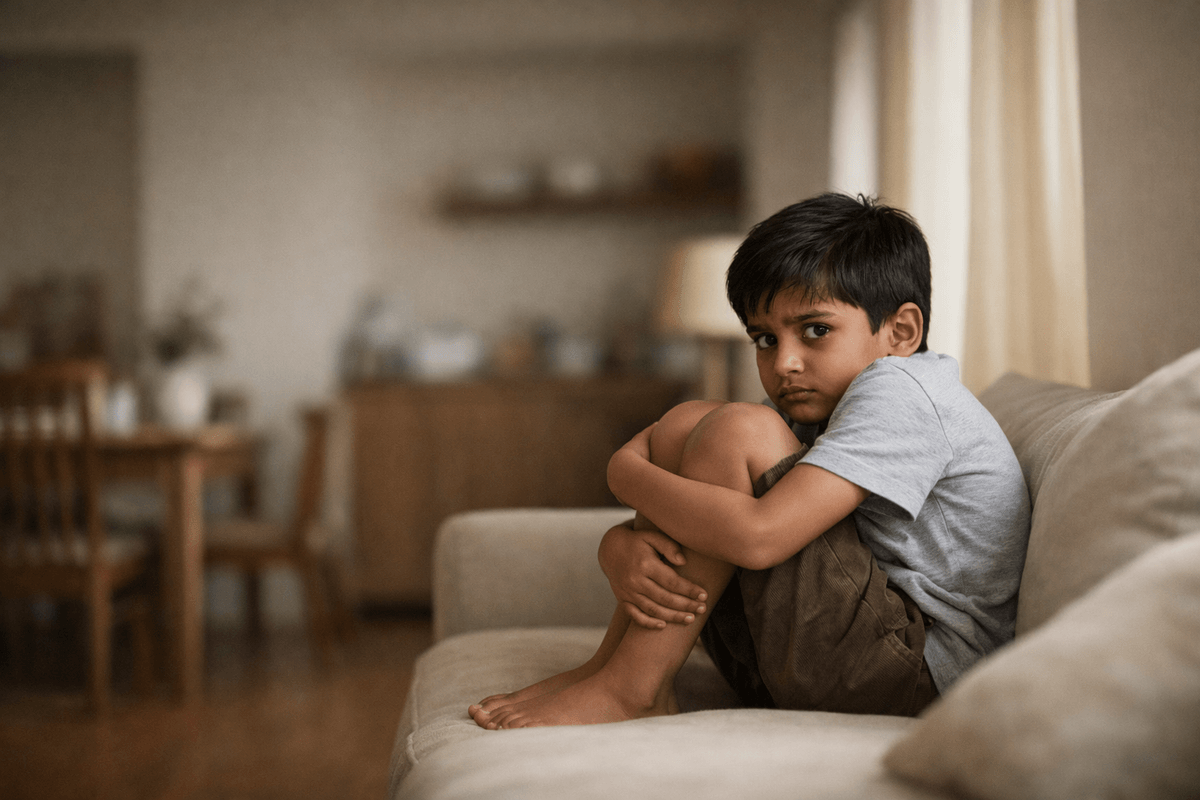
It may have been a single event or something that happened over time. It may be something they talk about, or something they have never mentioned. But you can see it in how they behave, how they sleep, how they flinch, or how they have shut parts of themselves away. Trauma leaves marks — and children deserve support that reaches those marks.
Recognition
Does This Feel Like You?
If any of the following sound familiar, you are not alone — and you have come to the right place.
Your child experienced something frightening, overwhelming, or harmful — and their behaviour or mood changed significantly afterwards
They have nightmares, or are afraid to sleep. They startle easily, are hypervigilant, or seem constantly on edge
They avoid anything that reminds them of what happened — places, people, sounds, topics — and become very distressed when they cannot avoid them
They seem to have emotionally shut down — less engaged, less interested in things they once loved, more distant from people close to them
They have flashbacks, or talk about the event as if it is happening again now. Or they refuse to speak about it at all
Their behaviour has changed significantly — more aggressive, more withdrawn, more clingy, more fearful than before
They have physical symptoms — stomachaches, headaches, bedwetting — that appeared after the experience and have no medical explanation
You feel helpless. You do not know how to reach them, or how to talk about what happened without making things worse
Understanding
What Childhood trauma and PTSD Actually Is
Trauma occurs when a child experiences an event or series of events that overwhelm their capacity to cope — events that feel life-threatening, deeply frightening, or profoundly unsafe. This can include accidents, medical procedures, natural disasters, violence, abuse, neglect, the sudden loss of a loved one, witnessing domestic violence, or sustained exposure to conflict or instability.
Post-traumatic stress disorder (PTSD) develops when the normal process of recovering from a frightening experience becomes stuck. Rather than processing and moving on, the nervous system remains in a state of alarm — replaying the experience through flashbacks and nightmares, avoiding anything associated with it, and maintaining a constant state of heightened vigilance that is exhausting and disruptive to daily life.
In children, trauma and PTSD do not always look the way adults might expect. Young children may not be able to describe what happened or explain why they are distressed. They may re-enact the trauma in play. Teenagers may turn to risk-taking behaviour, self-harm, or substance use as a way of managing feelings they cannot otherwise contain. Aggression, emotional withdrawal, school refusal, and relationship difficulties are all common presentations of unprocessed trauma in children.
Trauma is also not only about single dramatic events. Complex trauma — the result of repeated, chronic experiences of neglect, abuse, or instability — affects the developing nervous system at a deeper level and often produces more pervasive difficulties with emotion, relationships, and self-worth.
Clearing the air
What People Often Get Wrong
Misconceptions about Childhood trauma and PTSD cause real harm — they delay help and increase shame. Here is what is actually true.
Common belief
"Children are resilient — they bounce back from difficult experiences"
What's actually true
Children are capable of resilience, but resilience is not automatic. It depends on the nature and duration of the experience, the support available afterwards, and the child's own vulnerabilities. Assuming a child will simply recover can mean missing a window for early intervention that makes recovery much easier.
Common belief
"If they don't mention it, they are over it"
What's actually true
Many traumatised children avoid talking about what happened — avoidance is one of the core features of PTSD. Silence does not mean resolution. In some cases, not talking about the experience is itself a symptom of how much it is still affecting them.
Common belief
"PTSD only happens after very severe events"
What's actually true
The impact of a traumatic event depends not just on what happened but on how the child experienced it, how much support they had around them, and their individual vulnerability. An event that one child manages without lasting difficulty can produce significant PTSD in another. The child's experience is what matters, not an external measure of severity.
Common belief
"Talking about it will make things worse"
What's actually true
Unguided, unsupported confrontation of trauma can be retraumatising. But properly conducted, evidence-based trauma therapy — which involves carefully paced, well-supported processing of the experience — is the most effective treatment we have and does not cause harm when done correctly.
Common belief
"They should be over it by now"
What's actually true
Trauma does not follow a timeline. Without support, symptoms can persist for months or years, and can resurface later in response to triggers that seem unrelated to the original event. "Should be over it by now" is not how trauma works — it is how we wish trauma worked.
The science
Why This Happens
When a threatening experience occurs, the brain's alarm system — the amygdala — fires a survival response that prioritises action over thought. Heart rate increases, muscles tighten, attention narrows. This response is adaptive in the moment. In most cases, once the threat has passed, the nervous system returns to its normal baseline and the memory is processed and stored in a way that allows it to be recalled without re-experiencing the fear.
In PTSD, this processing does not complete. The memory remains stored in a fragmented, emotionally raw state — and the nervous system continues to respond as if the threat is ongoing. Triggers that resemble any element of the original experience — a sound, a smell, a phrase, a feeling — can activate the alarm response all over again, without the person having any conscious intention to revisit what happened.
Children's developing nervous systems are particularly sensitive to trauma because early experiences shape the architecture of the stress-response system. A child who has experienced sustained trauma may have a nervous system calibrated for chronic threat even after the threat has passed. Relationships are a crucial part of recovery — a safe, consistent, attuned relationship with a trusted adult is one of the most powerful protective factors against the lasting effects of trauma.
Real impact
How Childhood trauma and PTSD Affects Daily Life
The effects go well beyond the symptoms themselves.
Sleep and physical health
Nightmares, night terrors, and hypervigilance make restful sleep very difficult. Physical symptoms — stomachaches, headaches, chronic tension — are common. A nervous system in permanent alert is exhausting to inhabit.
Emotional regulation
Children with unprocessed trauma often have difficulty managing their emotions — swinging between intense emotional reactions and emotional numbness. They may appear aggressive, withdrawn, or both at different times.
Learning and concentration
A brain that is oriented towards threat detection cannot easily devote resources to learning. Attention, memory, and concentration all suffer. Academic performance often drops following trauma.
Relationships
Trust is often the first casualty of trauma, particularly when the trauma involved another person. Children may become suspicious, clingy, or emotionally withdrawn with the people they were previously close to. Forming new relationships becomes more difficult.
Self-concept
Children who experience trauma — especially repeated trauma — often develop beliefs about themselves that reflect the worst of what happened to them: that they are worthless, damaged, to blame, or fundamentally unsafe in the world. These beliefs, if unaddressed, can shape how they move through adolescence and into adulthood.
Before seeking help
What Most Families Try First
Most people who come to us have already tried a lot of other things. If any of these sound familiar, you are not alone — and you have not failed.
Trying to reassure the child by minimising what happened — "it was a long time ago", "it wasn't that bad", "you're safe now" — which, while well-intentioned, does not address the nervous system's experience
Avoiding any mention of the event, hoping not to disturb the child — which may protect the parent from distress but leaves the child feeling that the experience is too terrible to speak about
Using discipline to manage the behavioural changes that followed the trauma, without understanding that the behaviour is communicating distress rather than defiance
Waiting for time to heal — not knowing that without support, the nervous system cannot complete its own processing
Seeking help only for the presenting symptoms (aggression, school refusal, sleep problems) without connecting them to the underlying trauma
The process
How Childhood trauma and PTSD Is Diagnosed
Assessment for childhood trauma and PTSD involves building a careful, comprehensive picture of what the child experienced, how they are responding, and what else might be contributing to the difficulties.
- 1
A detailed first consultation with Dr. Divya — typically with parents first to understand the history, the specific experiences the child has had, and how behaviour and mood have changed since
- 2
A clinical interview with the child, conducted at their pace, in a way appropriate to their age and comfort — this is about understanding their experience, not interrogating them about what happened
- 3
Standardised trauma assessments and questionnaires to understand the nature and severity of symptoms
- 4
Assessment of co-occurring conditions — anxiety, depression, ADHD, and emotional dysregulation are common companions of trauma and need to be identified and addressed alongside the trauma itself
- 5
A clear, honest formulation shared with the family — explaining what is understood to be happening, why, and what the treatment plan would look like
Assessment itself is handled carefully. For many families, it is the first time someone has listened to the full story. That listening has value in itself.
Ready to get clarity?
An accurate assessment is the starting point for everything. Dr. Divya takes the time to get it right — and to explain her findings clearly, without pressure.
Treatment
How We Help
Trauma treatment in children is most effective when it combines evidence-based trauma therapy with parent involvement and, where needed, support for co-occurring conditions.
Trauma-Focused Cognitive Behavioural Therapy (TF-CBT) — the gold-standard evidence-based treatment for childhood PTSD. Involves the child and parents, and works through carefully paced processing of the traumatic experience alongside skills for managing trauma-related emotions
Parent guidance and coaching — equipping parents to provide the safe, regulated relationship that is the foundation of trauma recovery, and supporting them in managing the secondary effects on the family
Assessment and treatment of co-occurring conditions — anxiety, depression, and ADHD are addressed alongside the trauma, not left to compound it
For complex trauma — where the experiences were repeated or occurred in the context of a relationship — a longer-term, relationship-based approach is used, building safety and stability before direct trauma processing begins
Medication — not the primary treatment for PTSD, but considered where the severity of anxiety, depression, or sleep difficulties requires pharmacological support alongside therapy
This is part of our Child & Adolescent Mental Health service — where you can learn more about Dr. Divya's full approach.
Outcomes
What Improves with the Right Support
We are always honest about what is realistic. With appropriate support and time, these are the changes families and individuals most often notice.
Reduced frequency and intensity of nightmares, flashbacks, and intrusive memories
A nervous system that is no longer constantly on alert — better sleep, less hypervigilance, fewer startle responses
The child can think and talk about what happened without becoming overwhelmed — it becomes a memory rather than a present experience
Improved emotional regulation — fewer explosive episodes, less emotional numbness, more access to the full range of feelings
Better relationships — more able to trust, to accept comfort, to connect with people close to them
A child who understands what happened to them and has a different relationship with it — one that does not define who they are or limit who they can become
Timing
When to Seek Help
Seek an assessment if your child has experienced something distressing and the effects are not resolving on their own.
-
Significant changes in behaviour, mood, or sleep have appeared or worsened following a difficult experience
-
The child is experiencing nightmares, flashbacks, or is actively avoiding reminders of what happened
-
The child has become notably more fearful, withdrawn, angry, or clingy than before
-
Physical symptoms — stomach pain, headaches — have appeared without medical explanation following a difficult experience
-
The effects have been present for more than a month and are not improving — or are getting worse
Trauma is not something children simply grow out of. But with the right support, recovery is genuinely possible — and the earlier that support begins, the better.
Not sure if you need help?
It is completely okay to reach out just to ask. Dr. Divya is happy to help you work out whether an assessment is the right next step — with no pressure.
Common questions
Frequently Asked Questions
My child was very young when it happened — can they really be affected if they can't remember it?
Yes. Early trauma — even from the first years of life — can have lasting effects on the developing nervous system and attachment system, even when there is no explicit memory of the events. The body remembers what the mind does not. In young children, trauma often appears through behaviour, physical symptoms, and emotional difficulties rather than through verbal memory.
Should I tell the school about what happened?
In most cases, yes — with appropriate boundaries. Sharing relevant information with teachers allows them to respond more sensitively to the child's needs and to avoid inadvertently triggering distress in the classroom. What to share, and how to share it, can be discussed as part of the treatment planning process.
Will therapy require my child to talk about what happened in detail?
Evidence-based trauma therapy involves processing the traumatic memory — but this is done carefully, at the child's pace, and only after a foundation of safety and coping skills has been built. The approach is collaborative, not forced. No child is required to share more than they are ready to share.
I was also affected by what happened. Does that matter?
It matters a great deal — and you are not alone in this. When parents are also affected by a traumatic event, their capacity to provide the regulated, reassuring presence that children need is understandably compromised. Supporting the parent alongside the child is often part of the treatment picture, and seeking support for yourself is not a distraction from supporting your child — it is part of it.
Is PTSD in children different from PTSD in adults?
The core mechanisms are the same, but the presentation differs considerably. Children — particularly young children — often express trauma through play, behaviour, and physical symptoms rather than through the verbal description of intrusive memories. Adolescents may present more similarly to adults, but are also more likely to turn to risk-taking behaviour or substance use as a way of managing trauma symptoms. Age-appropriate assessment and treatment are essential.
Also worth reading
Related Conditions
Trauma leaves marks. But it does not have to leave permanent ones.
Book a consultation with Dr. Divya C.R. at Intune Mind, Coimbatore. In-person and telepsychiatry appointments available.